Global CNC Precision Machining Services
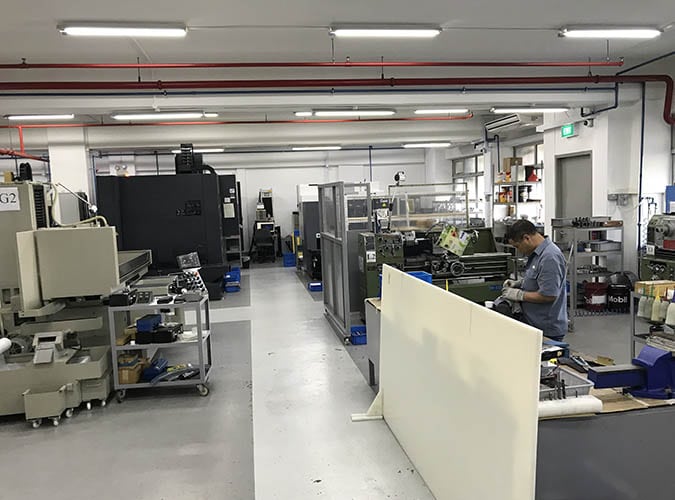
At Nyalt Precision, we’re a family-owned machine shop specializing in CNC precision machining of difficult-to-machine aerospace materials. Our equipment can hold tolerances to five microns, or 0.0002″, on qualifying parts and features, depending on material, geometry, setup stability, and inspection requirements. Complex parts are manufactured consistently from the first piece through full production runs.
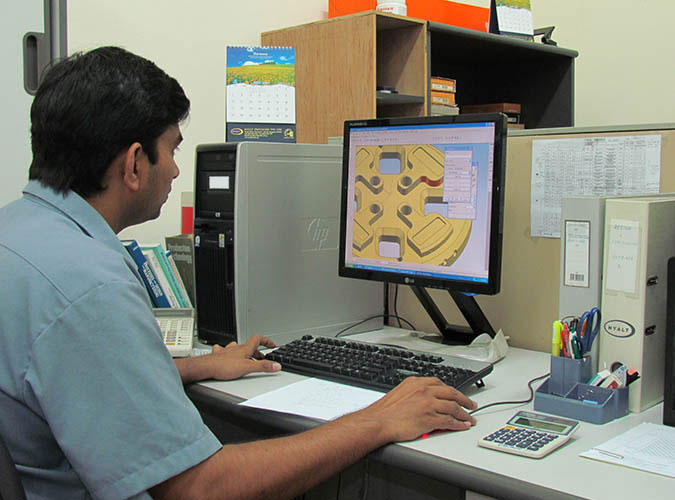
We handle demand changes quickly and keep turnaround fast on critical and complex parts. Our pricing stays competitive because the process reduces wasted time before and during production. Every machining center runs integrated CAD/CAM software, and toolpaths are programmed and verified ahead of production. The turning machines use a rapid traverse, compact turret with multitasking functions, and hold tight tolerances for both roundness and surface roughness.
Contact us below to get a quote for CNC machining services


What We Excel At
Who This is For

CNC Vertical Milling & Advanced Machining in Singapore
Machine List
CNC Vertical Milling
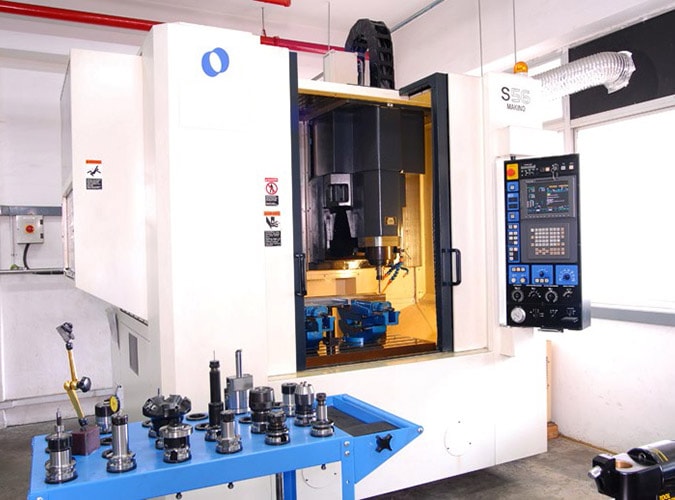
- Makino S56, Fanuc Professional 3 Controller: The S56 runs Super Geometrical Intelligence (SGI) motion control. SGI increases feed rates and tightens tolerances on intricate 3D contoured shapes.
- Makino F5 with Tsudakoma (Multi-Axis) and Fanuc Professional 5 Controller with Renishaw Primo Twin Probe System: The Tsudakoma rotary table provides the F5 with multi-axis positioning. Multiple faces of a part are machined in a single setup.
- Makino F5, Fanuc Professional 5 Controller with Renishaw Primo Twin Probe System: The F5 handles precision 3-axis vertical milling. Renishaw’s Primo Twin Probe measures tools and workpieces in-process, and the controller updates offsets without removing the part from the fixture.
CNC Turning
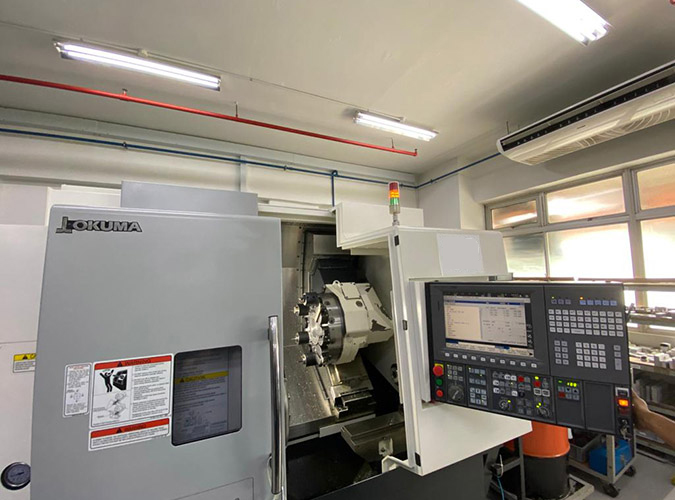
- Okuma Genos L400, OSP-P200 L-R Controller: The L400 handles turning for rotational components. OSP-P200 control runs a real 3D simulation of the machining operation.
- Okuma Genos L300-MY w/ Live Tooling, OSP-P300 L-R Controller: Live tooling lets the turret perform milling operations on the lathe and complete turned parts with drilled holes, slots, or milled flats in a single setup. The Y-axis handles off-center features without requiring the part to be transferred to a milling center.
CAD/CAM Software
- Mastercam, CNC Software Inc. (2D & 3D): Mastercam programs 2D and 3D milling and turning operations across all machining centers.
- Unigraphics, Siemens (Advanced 5-Axis Machining): Unigraphics NX handles advanced 5-axis toolpath strategies for complex aerospace geometry.

CNC Machining Tolerances for Aerospace Materials
The table below shows our precision capability against a typical commercial baseline for the aerospace alloys we machine.
| Aerospace Material | Typical Applications | Typical Shop Tolerance | Nyalt Precision Capability |
|---|---|---|---|
| Aluminum 7075 | Aircraft structures, brackets, housings | ±0.003″
(±0.076mm) |
±0.00012″
(±0.003mm) |
| AMS 4027 Aluminum | Aircraft skins, instrument enclosures, brackets | ±0.003″
(±0.076mm) |
±0.00012″
(±0.003mm) |
| Titanium Ti-6Al-4V | Landing gear, airframe components, engine mounts | ±0.005″
(±0.127mm) |
±0.0002″
(±0.005mm) |
| Inconel 718 & 625 | Turbine components, exhaust systems, high-temp engine parts | ±0.005″
(±0.127mm) |
±0.0002″
(±0.005mm) |
| Stainless Steel 17-4PH | Aerospace hardware, shafts, structural parts | ±0.003″
(±0.076mm) |
±0.00012″
(±0.003mm) |
| Stainless Steel 15-5PH | Landing gear components, shafts, and structural parts | ±0.003″
(±0.076mm) |
±0.00012″
(±0.003mm) |
| Rene 77 (R77) | Hot-section turbine components, extreme-temperature aerospace parts | ±0.005″
(±0.127mm) |
±0.0002″
(±0.005mm)* |
How Aerospace Materials Affect Machining Risk
Aerospace alloys do not fail in the same way during machining. Titanium and nickel alloys can accelerate tool wear and heat buildup, while softer aluminum grades can create finish, chip control, and deformation issues during close-tolerance work.
These material differences affect tool selection, cutting strategy, setup planning, and inspection frequency. That planning helps reduce the risk of scrap before expensive aerospace material reaches final inspection.
Quality and Certifications

Frequently Asked Questions
What industries do you serve?
Do you coordinate finishing and secondary operations?
Is part marking and traceability available?
Can you handle assembly in addition to machining?
our facility