AS9100 Precision Grinding Services
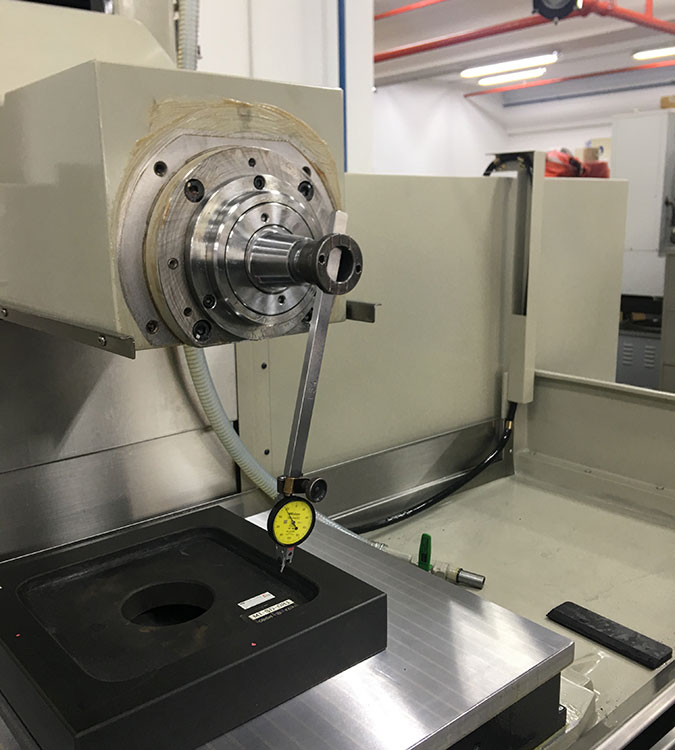
Nyalt Precision provides AS9100-certified grinding services for a wide range of aerospace alloys and industries. Our equipment holds tolerances within two microns, or 0.00008″, on qualifying parts, and experienced operators maintain that accuracy in a climate-controlled environment. Efficient setups and in-house process control keep overhead low and pricing competitive on complex grinding work.
Post-heat treatment grinding is available across surface, form, and cylindrical methods, and we correct distortion and remove scale to restore the final geometry. Located in Singapore, we serve American and international manufacturers with English-language communication and direct export logistics. Technicians with direct experience on difficult materials and close-tolerance work handle every project from initial setup through final inspection.


What We Excel At
Since 2004, our Singapore shop has specialized in precision grinding for global manufacturers. We correct distortion and restore geometry on post-heat-treatment titanium and Inconel components. Our shop keeps investing in new equipment and training staff on difficult alloys. Our centralized location means shipped parts reach the U.S. and Europe faster than many domestic providers.
Who This is For
OEMs and MROs in aerospace and defense send us grinding work from overseas. They need completed parts in the U.S. or Europe faster than domestic shops can deliver. We finish those parts in Singapore and keep their production lines moving. Businesses that outsource grinding to Asia value the IP protection Singapore law provides.

Grinding Methods Offered by Nyalt Precision
At Nyalt Precision, we use five grinding processes, each suited to a specific class of part geometry and finishing objective. Selection depends on whether the work involves flat surfaces, cylindrical features, internal bores, or custom profiles. The table below outlines each method, its primary purpose, and the component types to which it is most commonly applied.
| Grinding Method | Typical Purpose | Common Component Types |
|---|---|---|
| Cylindrical Grinding | Precision diameter control without centers or chucks | Shafts, pins, rollers, sleeves |
| Surface Grinding | Flat surface finishing and dimensional control | Plates, tooling, wear surfaces |
| OD Grinding | Finishing external diameters and cylindrical features | Shafts, journals, bearing surfaces |
| ID Grinding | Finishing internal diameters and bores | Bushings, bearing races, sleeves |
| Form Grinding | Producing specific profiles and contours | Custom tooling, specialty components |
Materials Nyalt Precision Grinds
We grind the same aerospace alloys we CNC machine, including titanium Ti-6Al-4V, Inconel 718 and 625, Rene 77, stainless grades 17-4PH and 15-5PH, aluminum, and hardened tool steels. Each material behaves differently under the wheel, so grit selection, feed rates, and coolant strategy are set per job. Carbide and harder workpieces demand finer abrasives and tighter feed control, and softer aluminum grades tend to glaze the cutting face and need more frequent dressing.
Inconel and Rene 77 work-harden rapidly at the contact zone and reach high cutting temperatures; both effects shorten consumable life and increase burn risk. Titanium has low thermal conductivity and tends to trap cutting heat in the workpiece, so the buildup directly affects dimensional accuracy and surface integrity. Our climate-controlled facility limits ambient thermal variation, and material-specific coolant application manages temperature at the cut and protects part geometry on every job.

Surface Finish Performance by Grinding Method
Ra is the arithmetic average of micro-profile deviations and the standard measure for finish requirements on precision ground components. Each of these requirements is functional, not cosmetic, and the specified value varies with how the part fits and moves in service. Grinding is one of the few manufacturing approaches capable of reliably hitting fine Ra targets across a production run.
Achievable Ra values differ by process type and depend on wheel specification, feed rate, and redress schedule. Finer targets require slower feeds, smaller abrasive grain, and more frequent conditioning passes, all of which extend cycle time. The table below shows typical Ra ranges by method as a starting point for engineers specifying ground components.
| Grinding Method | Typical Ra (µm) | Typical Ra (µin) | Common Applications |
|---|---|---|---|
| Surface Grinding | 0.2 – 0.8 | 8 – 32 | Tooling plates, wear surfaces, flat sealing faces |
| OD Grinding | 0.2 – 0.8 | 8 – 32 | Bearing ODs, journals, and shaft diameters |
| ID Grinding | 0.1 – 0.4 | 4 – 16 | Bores, bearing races, sleeve IDs |
| Cylindrical Grinding | 0.1 – 0.8 | 4 – 32 | Pins, rollers, precision round stock |
| Form Grinding | 0.4 – 1.6 | 16 – 63 | Custom profiles, contoured tooling |
Prototype and Short-Run Grinding Support
Not every grinding project involves high volumes, and our conventional machine tools are maintained specifically for prototype and short-run work. One-off components and small batches require the same dimensional control as production parts, and setups are built to that standard from the first piece. Machining and grinding are performed in the same facility, so turnaround stays fast without outsourcing either operation.
Engineering validation parts often need ground surfaces to support accurate functional testing and inspection. Running both operations in-house eliminates handling risk and tolerance variation introduced by split-source vendors. For development programs, keeping machining and grinding with a single supplier shortens lead time and removes handoff risk during volume ramp-up.
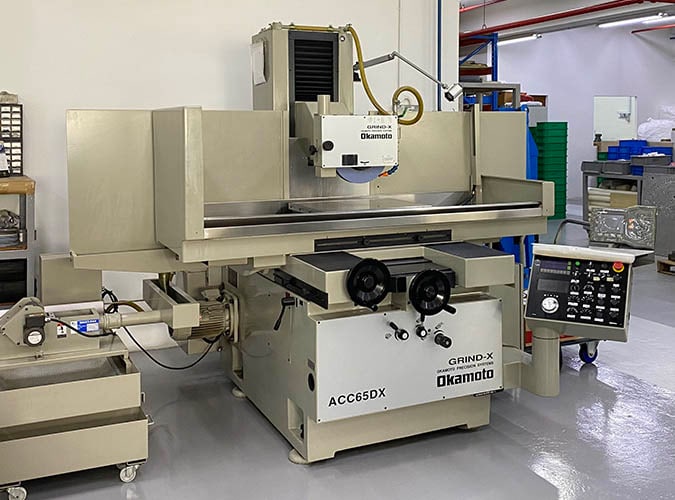
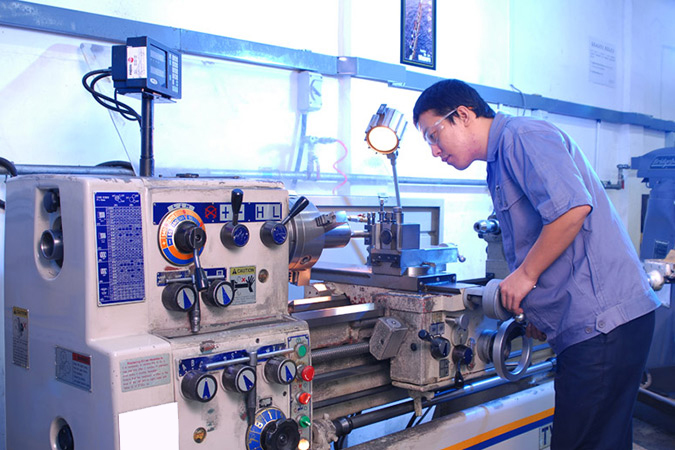
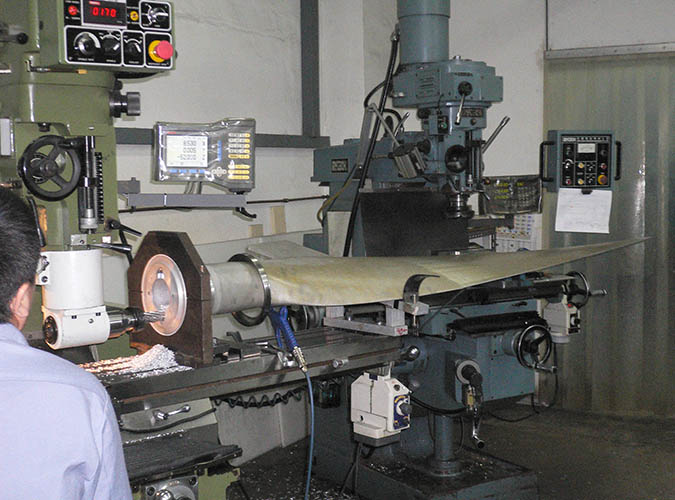
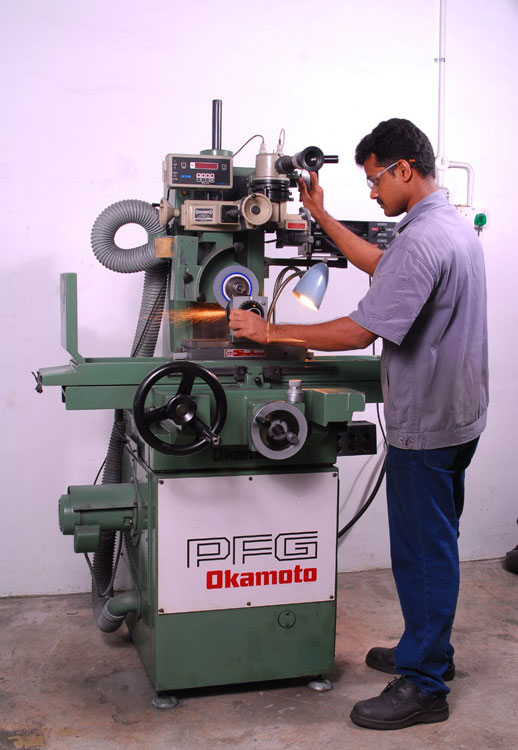
Our Lathes, Precision Grinding Equipment, and Milling Machines
For one-off parts, prototypes, and uniquely shaped components, we use our conventional lathes and milling machines ahead of the grinding stage. The lathes run 2-axis DRO for dimensional control, and the mills use 3-axis DRO for accurate positioning on complex geometry. Both machine types handle stock removal, tooling, and assembly preparation within the same facility as our grinding work.
Grinding Machines
- Okamoto PFG350DX with Heidenhain DRO (Optidress Form Wheel): Optidress conditions the wheel to a specified profile between passes, so complex contoured features maintain their geometry throughout the grinding operation.
- Okamoto ACC65DX with Heidenhain DRO (Standard Accessories): The Heidenhain DRO provides real-time positional feedback throughout the run, ensuring consistent dimensional output across the entire job.
Conventional Machine Tools
Lathe
- Kinwa CH-530X1100 with Fanuc DRO (Taper Attachment): Fitted with a taper attachment, this machine cuts tapered bores, shafts, and angled features without the repositioning a standard lathe would require.
- Kinwa CHD-760X1500 with Fanuc DRO (Standard Accessories): Swing capacity of 760mm and 1500mm between centers handles longer and larger-diameter workpieces than the smaller Kinwa model.
Milling
- Top Well 5VKF with 3 Axis DRO (Standard Accessories): The three-axis DRO on this knee mill provides precise coordinate control for drilling, boring, and milling on smaller components.


Frequently Asked Questions
What industries do you grind parts for?
We work with a wide range of American and international manufacturers across aerospace, commercial flight, unmanned systems, marine, and precision electrical programs.
Do you provide engineering review ahead of production?
Our in-house engineering team reviews drawings ahead of production to identify the right grinding method, tolerances, and sequencing for each job.
Can you provide quality documentation with ground parts?
Yes, every order ships with full quality documentation and part traceability, per our AS9100 certification requirements.
What tolerances can you hold in grinding?
Grinding tolerances here reach two microns, or 0.00008″, on qualifying parts, and the value varies by material, geometry, and feature type.
our facility